Compliance Requirements for Labour Supply in the UAE: A Practical Guide for Businesses
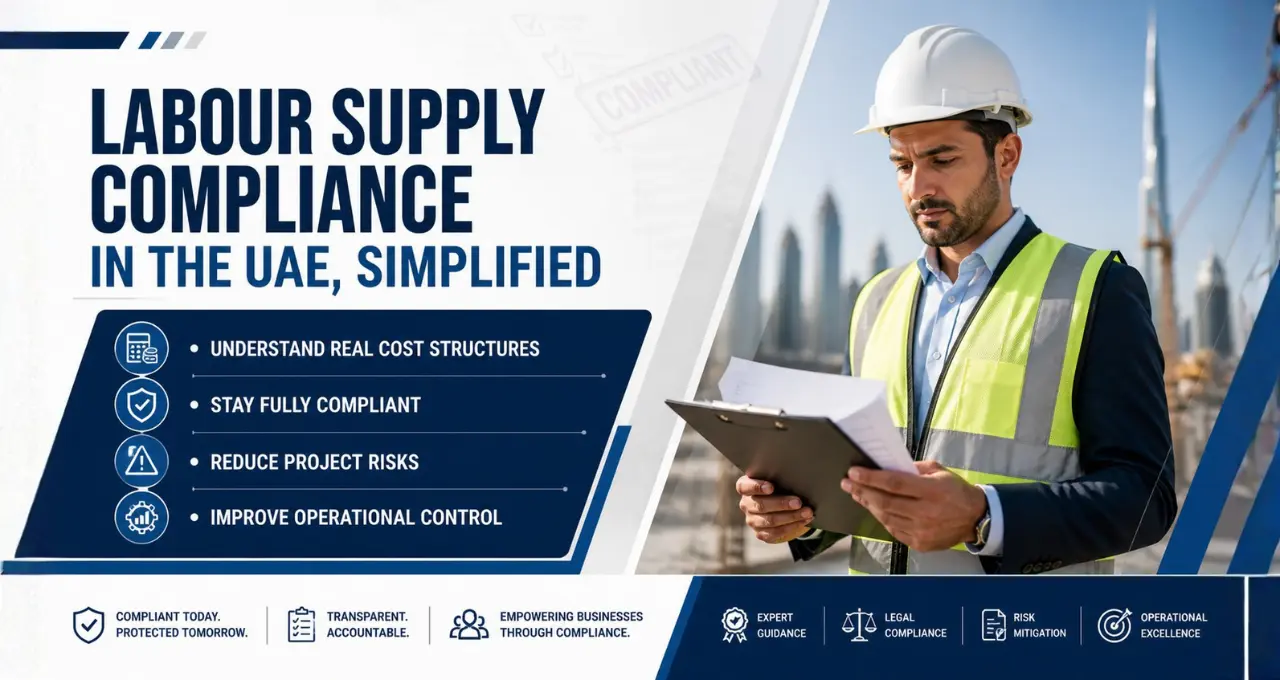
Most businesses in the UAE don’t struggle to find workers.
They struggle to understand what those workers really cost… and what risks come with hiring them.
On paper, labour supply looks simple. You sign a contract with a labour supply company, agree on rates, and manpower arrives.
But once the project begins, the real questions start.
Why are costs increasing?
Who is responsible for compliance?
What happens if the workforce needs to change mid-project?
That’s where things get complicated.
Because the labour supply in the UAE is not just about hiring people. It’s about managing cost, risk, and flexibility at the same time.
Labour Supply in the UAE Is More Structured Than It Looks
At first glance, labour outsourcing seems like a straightforward decision.
But in the UAE, it operates within a structured system shaped by regulations, contracts, and operational demands.
When you work with a labour supplier, you are not just paying for manpower.
You are also dealing with:
- legal responsibility
- workforce management
- compliance requirements
- long-term operational costs
That’s why understanding how labour supply works is critical before signing any agreement.
Understanding the Real Cost of Labour Supply
The biggest misconception?
Businesses often assume they are only paying wages.
In reality, the cost of labour supply includes multiple layers.
Direct Costs
- Worker wages
- Overtime payments
- Allowances (if applicable)
Indirect Costs
- accommodation
- transport
- meals or catering
- administrative management
Compliance Costs
- documentation and permits
- visa processing
- insurance and legal coverage
Now imagine these costs across a workforce of 200 or 500 people.
Even small miscalculations can lead to significant budget gaps.
That’s why experienced businesses don’t just compare rates.
They evaluate the total cost.
Compliance in the UAE: More Than Just Paperwork
Labour regulations in the UAE are strict. And for good reason.
They are designed to protect both workers and businesses.
But compliance is not always easy to manage.
It involves multiple areas:
- employment contracts
- worker welfare
- accommodation standards
- health and safety practices
Ignoring even one of these can create serious problems.
- fines
- project delays
- legal complications
And in some cases, work stoppages.
Who Handles Compliance in Labour Supply?
This is where many businesses get confused.
If you outsource labour, does compliance become the supplier’s responsibility?
The answer is not always straightforward.
In most cases:
- The labour supply company handles documentation and employment processes
- The business remains responsible for on-site safety and working conditions
That means compliance is shared.
And shared responsibility requires clear coordination.
Common Compliance Risks Businesses Face
Even with a supplier, risks still exist.
- incomplete or incorrect documentation
- non-compliant accommodation arrangements
- poor worker welfare practices
- lack of proper supervision on-site
These issues don’t always appear immediately.
But when they do, the impact is serious.
That’s why businesses prefer suppliers with strong compliance systems.
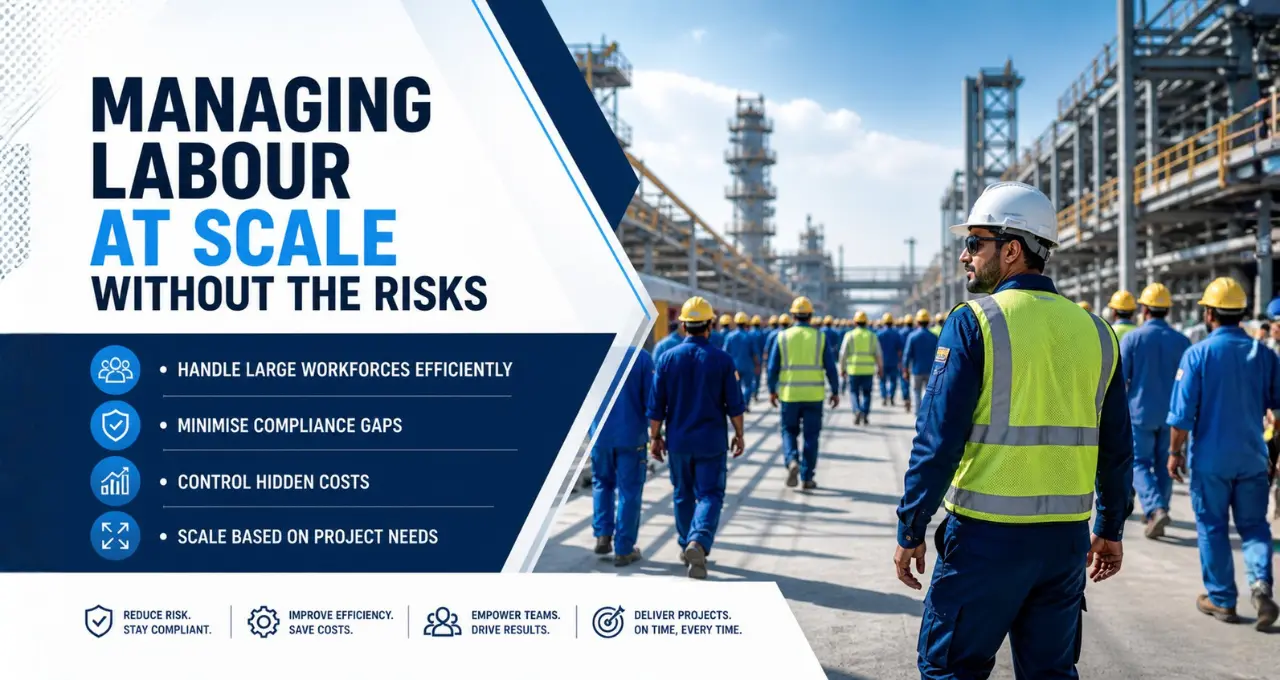
Contract Models in Labour Supply in the UAE
Not all labour supply agreements are the same.
Choosing the right contract model can affect cost, flexibility, and risk.
Here are the most common types.
- Fixed Rate Contracts
You pay a fixed rate per worker. This usually includes wages, accommodation, and basic services.
Best for:
- long-term projects
- stable workforce requirements
Watch out for:
- limited flexibility if project scope changes
- Time-Based Contracts
You pay based on hours or shifts worked.
This allows more flexibility in workforce usage.
Best for:
- short-term or variable projects
Watch out for:
- higher cost if not monitored properly
- Project-Based Contracts
The supplier provides manpower for a specific project scope.
Cost is linked to deliverables rather than headcount.
Best for:
- clearly defined project tasks
Watch out for:
- dependency on supplier performance
- Flexible / Scalable Contracts
These allow businesses to increase or reduce manpower as needed.
Best for:
- projects with changing workforce demands
Watch out for:
- need for strong coordination
- Choosing the Right Contract Model
There is no one-size-fits-all solution.
The right choice depends on:
- project duration
- workforce stability
- budget control
- operational flexibility
Many businesses make the mistake of choosing based only on cost.
But cost without flexibility often creates problems later.
Read Our Blogs
Industrial Projects & Power Systems in Dubai: How to Choose the Best Electrical Services
Why Abu Dhabi’s Manpower Supply Matters: Bridging Employers and Skilled Workers
Why Businesses Are Moving Towards Integrated Labour Solutions
Earlier, labour supply was treated as a standalone service.
Now, businesses are looking for integrated solutions.
Why?
Because manpower alone is not enough.
Projects also need:
- accommodation
- transport
- catering
- workforce management
Managing these separately creates coordination gaps.
And gaps lead to delays.
That’s why integrated labour supply solutions are becoming more common in the UAE.
What to Look for in a Labour Supply Company
Choosing the right partner is not just about pricing. It’s about reliability and operational strength.
Look for:
- experience in UAE projects
- strong compliance systems
- ability to scale manpower quickly
- clear and transparent contract terms
- support services beyond manpower
Because the real value of labour supply is not in hiring.
It’s in how smoothly operations run after hiring.
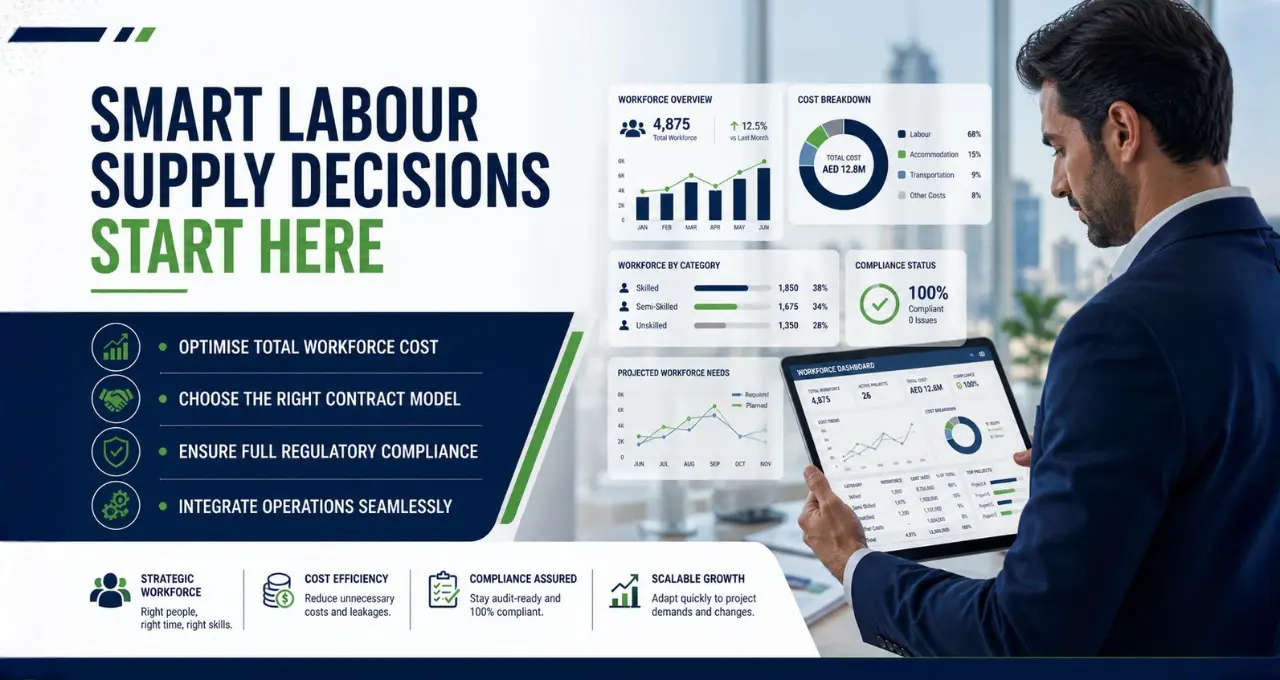
Where Euro Emirates LLC Adds Value
Many companies provide manpower. Euro Emirates LLC focuses on complete workforce support.
Our approach is built around real project needs.
- structured labour supply, UAE solutions aligned with project timelines
- flexible contract models based on workforce requirements
- strong compliance processes across all operations
- integrated services including accommodation, transport, and support
- consistent delivery without operational disruption
This reduces risk.
And reduces the need for constant supervision.
Cost, Compliance, and Contracts Are Connected
Here’s something important to remember.
Cost, compliance, and contracts are not separate.
They are connected.
- A poorly structured contract increases cost
- Weak compliance creates legal risk
- Limited flexibility affects project timelines
That’s why businesses need to evaluate labour supply decisions from all three angles.
Not just one.
Frequently Asked Questions
-
What is the labour supply in the UAE?
It is the process of outsourcing manpower through a labour supply company for construction, industrial, or operational needs.
-
What affects labour supply cost in the UAE?
Costs depend on wages, accommodation, transport, compliance requirements, and workforce size.
-
Who handles compliance in labour supply?
Both the supplier and the hiring company share responsibility, depending on the scope of work.
-
Which contract model is best for labour supply?
It depends on the project’s needs. Fixed contracts suit stable projects, while flexible models work better for changing workforce demands.
Final Thoughts
Labour supply in the UAE is not just a hiring decision.
It’s a business decision that affects cost, risk, and efficiency.
When managed well, it keeps projects running smoothly.
When misunderstood, it creates hidden challenges that surface later.
That’s why choosing the right labour supply company and the right contract model matters more than most businesses realise.
Because in the end, it’s not just about how many workers you hire.
It’s about how well your workforce system performs under pressure.