Why Businesses in Dubai Are Outsourcing Electro-Mechanical Services in 2026
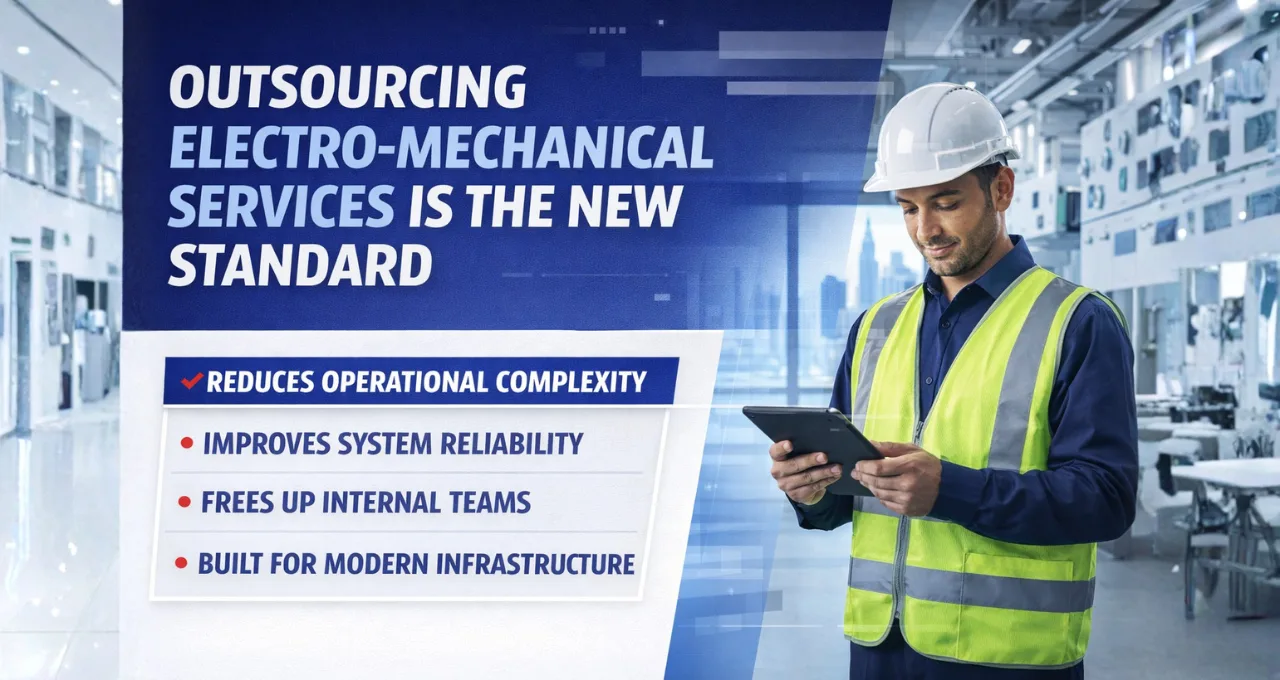
Something has quietly changed in how businesses in Dubai approach operations, and if you look closely, the shift is quite clear.
A few years ago, most companies preferred to manage electromechanical systems internally because it gave them a sense of control and direct oversight. It felt safer, more predictable, and easier to manage within their own teams.
Now, that thinking is evolving.
More businesses are stepping back and asking a more practical question:
“Are we really gaining control, or are we just adding more complexity to our operations?”
That question is one of the main reasons outsourcing in electro-mechanical services in Dubai is growing steadily in 2026. And this shift is no longer just about reducing cost. It is about improving how operations run on a daily basis.
The Real Role of Electro-Mechanical Services
If you take a step back, electromechanical systems are not just technical components sitting in the background.
They are what keep everything running.
From power distribution and HVAC systems to water supply and fire safety infrastructure, these systems form the backbone of any facility. When they perform well, operations flow smoothly without interruptions.
But when they don’t, even for a short time, the impact is immediate.
Work slows down. Comfort drops. In some cases, operations come to a complete halt.
The challenge today is not understanding their importance. The challenge is managing them efficiently as systems become more complex.
What’s Changing for Businesses in Dubai?
Dubai’s infrastructure is becoming more advanced every year.
Buildings are smarter. Systems are interconnected. Compliance requirements are stricter. And expectations from clients and stakeholders are significantly higher.
Now imagine trying to manage all of this with an internal team that is already handling multiple responsibilities.
It doesn’t take long before gaps start to appear.
Maintenance schedules begin to slip. System performance becomes inconsistent. Costs start rising in unexpected ways. Compliance starts feeling like a constant pressure rather than a structured process.
This is exactly where outsourcing begins to make practical sense.
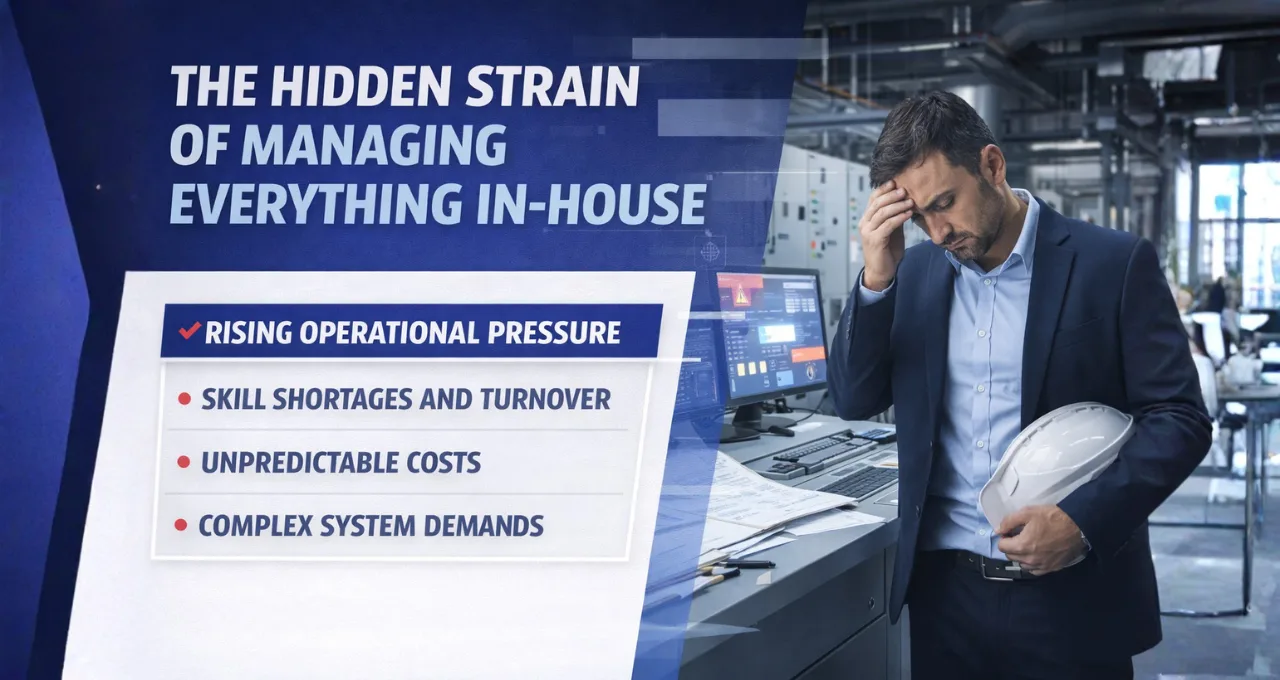
The Hidden Strain of In-House Electro-Mechanical Teams
On the surface, having an in-house electromechanical team seems like the best way to stay in control.
But in reality, it brings a different kind of pressure.
Managing an internal team means taking responsibility for everything, not just the systems themselves.
You are dealing with hiring, training, retention, scheduling, emergency handling, and ongoing performance monitoring.
And that’s before you even consider the technical side of maintenance.
Now add another layer to this.
Skilled technicians are in high demand, and retaining them consistently is not always easy.
Over time, what once felt like control starts to feel like a continuous operational burden.
Why Outsourcing Is Growing in 2026
Outsourcing is not a new concept, but the reasons behind it have changed significantly.
Earlier, businesses outsourced mainly to reduce costs.
Now, they are doing it to simplify operations and improve efficiency.
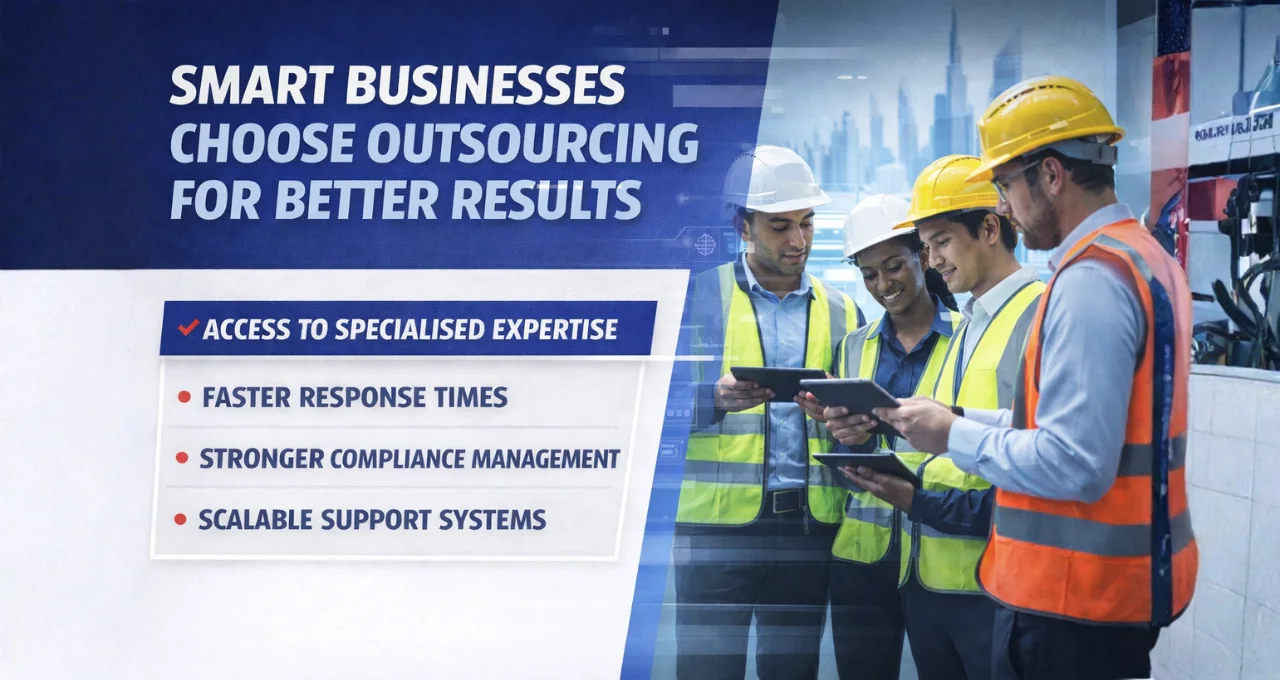
- Access to Specialised Expertise
Electromechanical systems are evolving quickly, and keeping up with these changes requires continuous learning and hands-on experience.
Outsourced teams work on these systems every day, across different projects and environments, which gives them a deeper level of expertise.
- Predictable Cost Structures
In-house teams often come with fluctuating costs that are difficult to control. Recruitment, training, overtime, and unexpected repairs can quickly increase expenses.
Outsourcing helps convert many of these into structured, predictable costs, making financial planning easier and more reliable.
- Faster Response and Maintenance
When a system fails, time becomes critical. Outsourced providers typically operate with structured response systems, dedicated teams, and clearly defined service levels.
This ensures faster issue resolution and reduces downtime significantly.
- Stronger Compliance Management
Regulations in Dubai are detailed and constantly evolving. Outsourced service providers stay updated because compliance is a core part of their operations.
This reduces the risk for businesses and ensures systems meet required standards.
- Flexibility and Scalability
Business needs are rarely constant. Some periods demand higher support, while others require less. Outsourcing allows companies to adjust service levels without the need to restructure internal teams.
The Shift Towards Integrated Services
Another major trend shaping 2026 is the move towards integrated service models.
Businesses are no longer interested in managing multiple vendors for different services.
Handling separate providers for electromechanical services, maintenance, workforce, and support services often leads to coordination issues.
And coordination issues lead to delays.
That’s why companies are now looking for partners who can manage multiple aspects of operations under one system.
It reduces confusion, improves communication, and keeps everything aligned.
What Businesses Often Get Wrong
Not every outsourcing decision delivers results.
In fact, some fail completely.
And the reason is usually simple.
The decision is based only on cost.
Choosing the lowest-priced provider might look like a smart move initially, but it often leads to inconsistent service, delayed responses, and hidden long-term expenses.
Outsourcing works best when businesses evaluate the full picture, including experience, systems, response capability, and consistency.
What to Look for in an Electro-Mechanical Partner
If you are considering outsourcing, the focus should be on reliability, not just pricing.
Look for providers who offer:
- proven experience in Dubai-based projects
- structured maintenance and reporting systems
- fast and reliable response times
- strong understanding of compliance requirements
- ability to scale services as needed
- clear and consistent communication
Because outsourcing is not about handing over responsibility.
It is about improving how that responsibility is managed.
Read Our Blogs
Trusted Electrical Workforce Solutions by Best Manpower Supply Firms in Dubai
How Expert Electrical Work Reduces Your Expenses in the Long Run
Why Businesses Are Rethinking Control
There is a clear shift in mindset.
Earlier, control meant doing everything internally.
Today, control means ensuring outcomes without being involved in every operational detail.
That difference is important.
Outsourcing allows businesses to focus on their core objectives while ensuring that essential systems are managed professionally.
The Role of Financial Planning in Outsourcing
Outsourcing decisions are not only operational. They are also financial. Businesses are now looking at long-term value instead of short-term savings.
They are evaluating:
- total operational cost over time
- efficiency gains from structured systems
- reduction in risk exposure
- predictability of expenses
This level of analysis requires clear financial insight.
Why Strategic Advisory Matters
When businesses plan outsourcing properly, they don’t rely on assumptions.
They use data and structured evaluation.
This includes:
- cost modelling
- contract analysis
- budgeting
- risk assessment
Having expert financial and operational guidance helps businesses make stable decisions, not reactive ones.
Where Better Planning Changes Outcomes
Outsourcing works when it is planned carefully. When decisions are rushed, gaps appear.
But when done properly, the results are clear.
- smoother operations
- better system performance
- lower long-term cost
- reduced management pressure
That is why outsourcing in electromechanical services is not just growing.
It is becoming a preferred approach.
Frequently Asked Questions
-
What are electromechanical services?
They involve the management and maintenance of electrical and mechanical systems such as HVAC, power supply, and water systems.
-
Why are businesses outsourcing electromechanical services in Dubai?
To improve efficiency, reduce operational complexity, and manage costs more effectively.
-
Is outsourcing always more cost-effective?
Not immediately in all cases, but it often reduces long-term costs and operational risks.
-
What should businesses look for in a provider?
Experience, structured systems, compliance knowledge, fast response, and consistent performance.
How Euro Emirates LLC Supports Modern MEP Operations
As businesses move towards outsourcing, the need for partners who understand both operations and on-ground realities becomes more important.
This is where Euro Emirates LLC brings practical value.
Instead of treating electromechanical services as a standalone function, they align it with broader operational needs.
- structured support that fits into real project timelines
- coordination across the workforce, accommodation, and facility services
- strong focus on compliance and safety standards in the UAE
- scalable solutions that adapt as project demands change
- consistent service delivery without operational gaps
This approach reduces the pressure on internal teams.
It also creates a more stable operating environment where systems, people, and processes work together instead of in isolation.
For many businesses, that shift alone makes a noticeable difference.
Final Thoughts
Outsourcing electromechanical services in Dubai is not just a trend driven by cost.
It is a response to increasing complexity and higher operational expectations.
Businesses are not outsourcing because they cannot manage internally.
They are outsourcing because it allows them to operate more efficiently, with fewer disruptions and better outcomes.
And as systems continue to evolve, this shift will only become stronger in the years ahead.