How Industrial Transport Services in the UAE Support Mega Infrastructure Projects
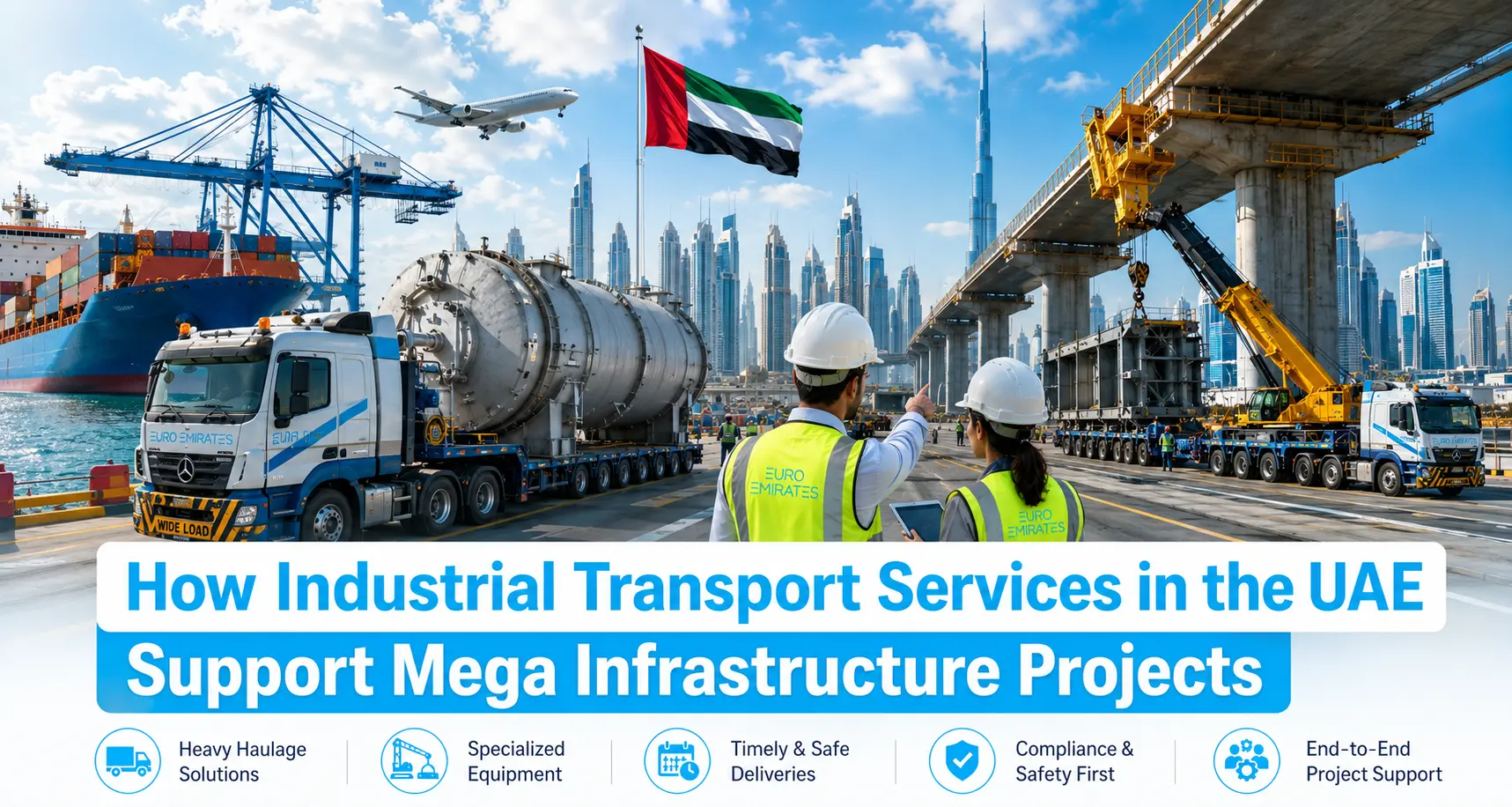
Walk past any major construction site in Abu Dhabi or Dubai before sunrise, and you’ll notice something that rarely makes headlines: rows of buses dropping off hundreds of workers, right on schedule, shift after shift.
That quiet logistics operation is what keeps the UAE’s giant infrastructure projects – power plants, desalination facilities, airports, oil rig platforms – running on time. It’s called industrial passenger transport, and it’s one of the least glamorous, most necessary pieces of the country’s construction and energy sector.
What Exactly Is Industrial Transport?
Industrial transport is the organised movement of a large workforce, materials, and site resources between accommodation camps, industrial zones, and project locations. It’s not the same as a regular staff shuttle. Think fleets of company-owned buses, water tankers, and material transport vehicles, all scheduled around shift timings that construction and manufacturing sites actually run on – early mornings, night shifts, and everything in between.
For mega projects, this isn’t a nice-to-have. It’s the backbone that keeps everything else – labour scheduling, site safety, project deadlines — from falling apart.
Why Mega Infrastructure Projects Depend on It
Large-scale developments in the UAE, whether it’s a power-generating complex, a petrochemical plant, or a multi-purpose real estate development, run on tight timelines and even tighter budgets. A single delayed shift can ripple through an entire project schedule. Here’s why organised transport matters so much on these sites:
- Workforce reliability. When hundreds of workers depend on the same fleet to reach a job site, punctuality isn’t optional – it’s operational.
- Safety and regulatory compliance. Overcrowded or poorly maintained vehicles create liability and safety risks that no contractor wants near a mega project.
- Cost control. A well-planned fleet with optimised routes cuts down on fuel waste and unnecessary trips, which adds up fast across a workforce of a thousand-plus people.
- Multi-service coordination. Beyond passenger movement, many of these projects also need water tanker supply, material transport, and waste management running in parallel — all coordinated by the same logistics partner.
Industrial Passenger Transport Dubai: A Growing Necessity
Dubai’s industrial belt – Al Quoz, Jebel Ali, Dubai Investment Park, and the wider industrial city clusters – is packed with manufacturing plants, logistics hubs, and ongoing construction. With so much activity concentrated in these zones, a dedicated fleet isn’t just convenient; it’s what keeps thousands of workers moving between accommodation facilities and job sites without disrupting the surrounding traffic or violating local transport regulations.
Providers operating in this space typically bring:
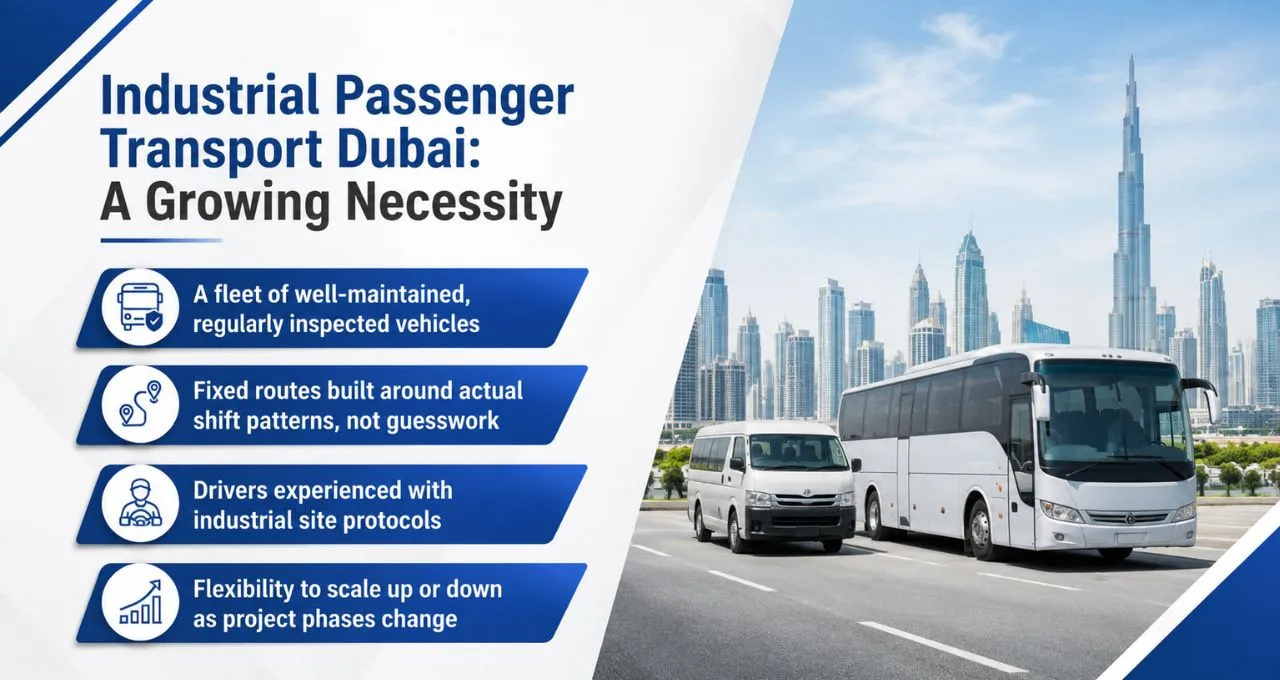
- A fleet of well-maintained, regularly inspected vehicles
- Fixed routes built around actual shift patterns, not guesswork
- Drivers experienced with industrial site protocols
- Flexibility to scale up or down as project phases change
Safety, Housing, and Welfare Go Hand in Hand
Here’s something that often gets overlooked: transport doesn’t exist in isolation. The companies doing this well tend to also manage worker housing, catering, and welfare standards under one roof. When a provider owns its accommodation facilities, runs its own catering teams, and operates its own fleet, there’s far less room for the gaps that usually cause compliance headaches – mismatched schedules, unlicensed vehicles, or workers left waiting at a pickup point that no longer exists.
Solar-powered facilities, human audit-compliant hiring practices, and owned housing complexes are becoming the standard that serious contractors look for before signing a long-term transport contract.
Read Our Blogs
Smart Hiring Solutions: How Labour Supply Services Save Time and Money
The Essential Role of Qualified Electricians in Solar Panel Installations
Labour Supply Contractors Near Dubai: Key to Improving Workforce Productivity
Skilled Professionals Matter: Electro-Mechanical Services in UAE
Choosing a Transport Partner for a Mega Project
If you’re managing procurement for a large development, a few questions tend to separate a dependable partner from a risky one:
- Does the provider own its fleet, or does it subcontract on short notice?
- Can they scale transport capacity as the project grows across multiple phases?
- Do they handle related services – water tankers, waste management, material transport – under the same contract?
- What’s their track record with government and industrial clients over the years?
A provider with decades of experience across the sector, rather than someone new to industrial – scale logistics, tends to absorb the unexpected disruptions that mega projects inevitably throw up.
Final Thought:
Mega infrastructure projects don’t succeed on design and materials alone. They succeed because the people building them show up on time, every day, safely. That’s the quiet value of a well-run industrial passenger transport in Dubai operation – and increasingly, of similar fleets across the wider Emirates.
For contractors weighing their options, Euro Emirates Group brings over four decades of experience across manpower, housing, and industrial transport into one coordinated service.
Frequently Asked Questions
What is Industrial Passenger Transport in the UAE?
It’s the organised, large-scale movement of workers between accommodation camps and industrial or construction sites, usually run on fixed shift schedules using company-owned buses.
Is industrial transport mandatory for construction projects?
In many sectors – construction, oil and gas, manufacturing – providing organised transport for a workforce living in shared accommodation is standard practice and often a compliance requirement.
Does industrial transport cover more than just passengers?
Yes. Established providers often bundle passenger transport with water tanker supply, material transport, and waste management under a single service agreement.
Which parts of the UAE need this the most?
Industrial zones with heavy construction and manufacturing activity – particularly across Dubai and Abu Dhabi – see the highest demand for Industrial Passenger Transport UAE-wide.
Want to discuss your projects with us? Connect with our expert team.