Shutdown & Turnaround Manpower in the UAE: Plan Before the Clock Starts
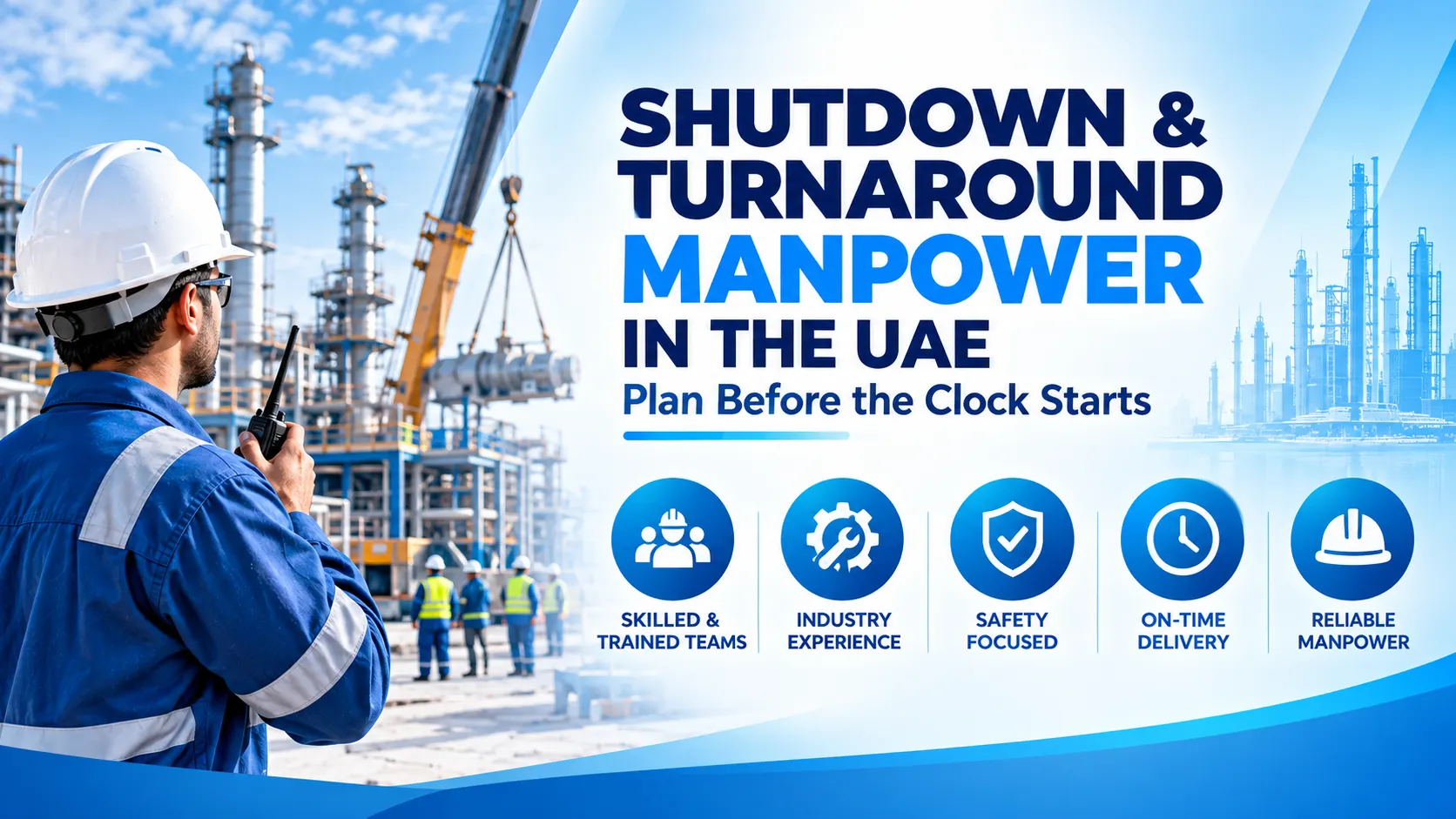
Shutdown Work Starts Before the Shutdown Begins
Picture an industrial facility preparing for a major shutdown.
The equipment is ready. Materials have arrived. Maintenance teams have prepared their work lists. Engineers have checked the plans. The date is fixed.
Then someone asks a simple question:
“Do we have enough people to complete everything on time?”
That question can change the entire project.
A shutdown is not like a normal working day. A large number of activities may need to happen within a limited period. Mechanical maintenance, inspection, repairs, electrical work, scaffolding, welding, painting, lifting, and safety operations may all happen at the same time.
This is why workforce planning should begin well before the shutdown date.
For companies working across the UAE’s industrial and energy sectors, the challenge is not simply finding workers. It is finding the right people, with the right skills, at the right time.
Recent industry guidance on GCC shutdown and turnaround recruitment also highlights the need for rapid mobilisation, skill matching, safety compliance, and careful workforce planning.
For businesses looking for industrial manpower supply in Dubai, this difference is important. A general labour supply approach may not be enough when an industrial project is working against a fixed shutdown window.
What Makes Shutdown and Turnaround Projects Different?
A shutdown is usually planned to stop part or all of an operating facility for maintenance, inspection, repair or other critical work.
A turnaround can involve an even wider programme of maintenance, equipment inspection, replacement, upgrades and project work before the facility returns to normal operation.
The pressure comes from one fact:
The clock is already running.
Every delayed activity can affect another work package.
For example, imagine a pipe-fitting team waiting for scaffolding to be completed. The scaffold team is short of workers. The pipe fitters cannot start. The welding team is also waiting.
One manpower shortage can create a chain reaction.
This is where Shutdown Manpower UAE planning becomes important. Instead of looking only at the total number of workers required, project managers need to understand:
- Which skills are required?
- When will each team be needed?
- How many workers are required per shift?
- Which activities depend on other teams?
- What qualifications or site approvals are required?
- How quickly can additional workers be mobilised?
- What happens if the workforce requirement suddenly increases?
These questions should be answered before the first maintenance activity begins.
Why Workforce Planning Matters for Industrial Projects
A project can have excellent equipment and a detailed schedule. But without enough skilled manpower, the schedule can quickly become difficult to maintain.
Euro Emirates’ own industry insights note that workforce availability can affect project scheduling, productivity, resource allocation, and completion speed in UAE oil and gas projects.
This becomes even more important during shutdowns.
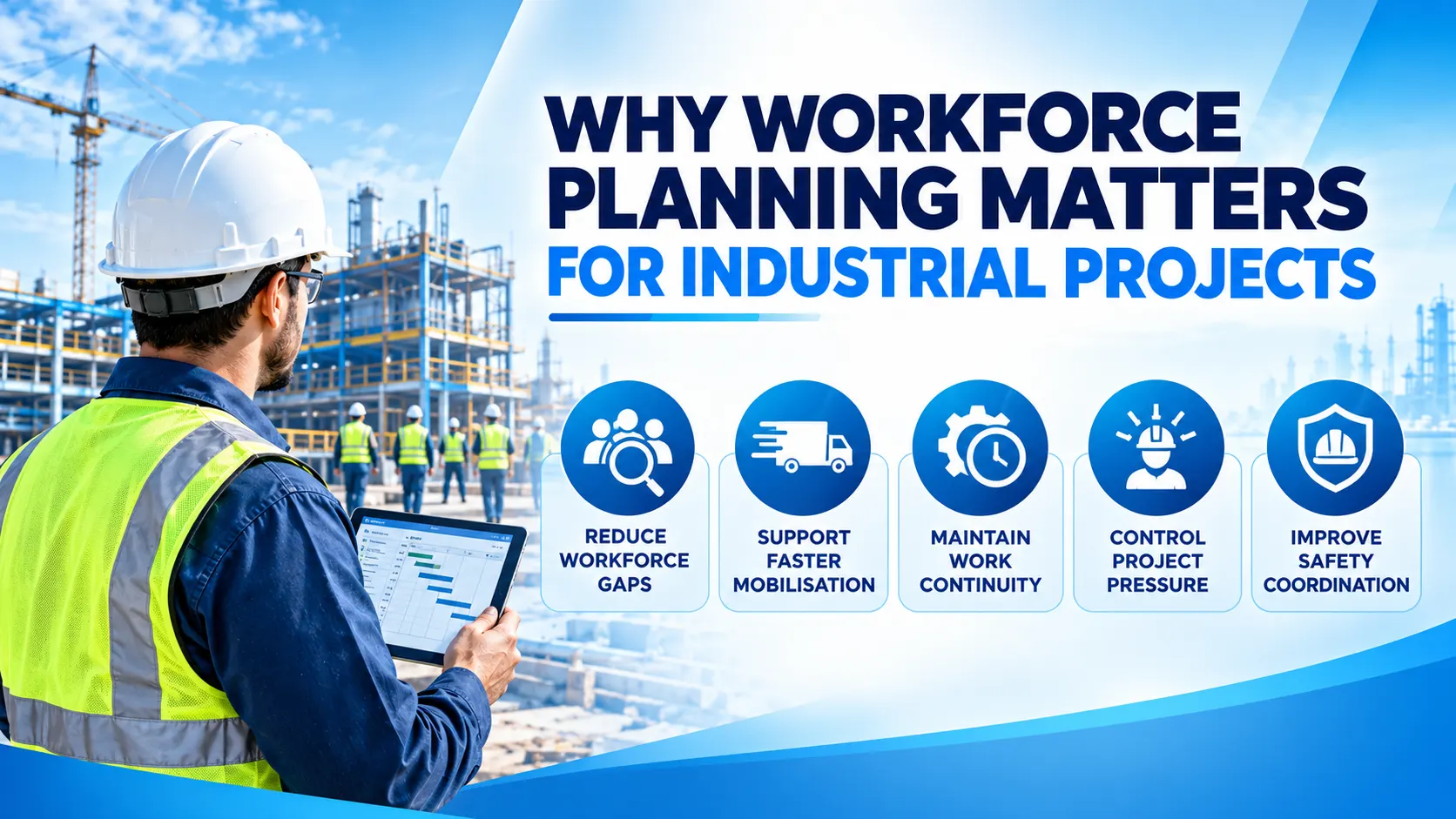
A planned workforce can help contractors:
Reduce Workforce Gaps
When manpower requirements are calculated in advance, companies can identify shortages before they become urgent.
Support Faster Mobilisation
Shutdown projects often require workers within a narrow time window. Early planning gives manpower providers more time to source, screen, and prepare suitable workers.
Maintain Work Continuity
A balanced workforce helps different teams work according to the project sequence instead of constantly waiting for additional resources.
Control Project Pressure
When workers are unavailable, existing teams may face increased workloads or overtime requirements. Proper workforce planning can help reduce this pressure.
Improve Safety Coordination
Industrial work requires more than technical ability. Workers must understand site procedures, hazards, and safety requirements relevant to their assignments.
Building an Effective Oil & Gas Shutdown Workforce
A strong oil & gas shutdown workforce should be planned around the actual work scope rather than a simple headcount target.
A contractor may need several categories of workers during a shutdown, depending on the facility and project requirements.
These can include:
- Mechanical fitters
- Pipe fitters
- Welders
- Electricians
- Instrument technicians
- Scaffolders
- Riggers
- Painters
- Equipment operators
- Supervisors
- Safety personnel
- Skilled and semi-skilled support workers
The exact requirement will vary from project to project.
For example, a refinery turnaround may need a large mechanical team during equipment maintenance. An electrical shutdown may require more electricians and instrumentation specialists. A major modification project may need additional welders, fabricators, riggers, and supervisors.
That is why manpower planning should start with the scope of work.
The number comes later.
The Four Stages of Shutdown Manpower Planning
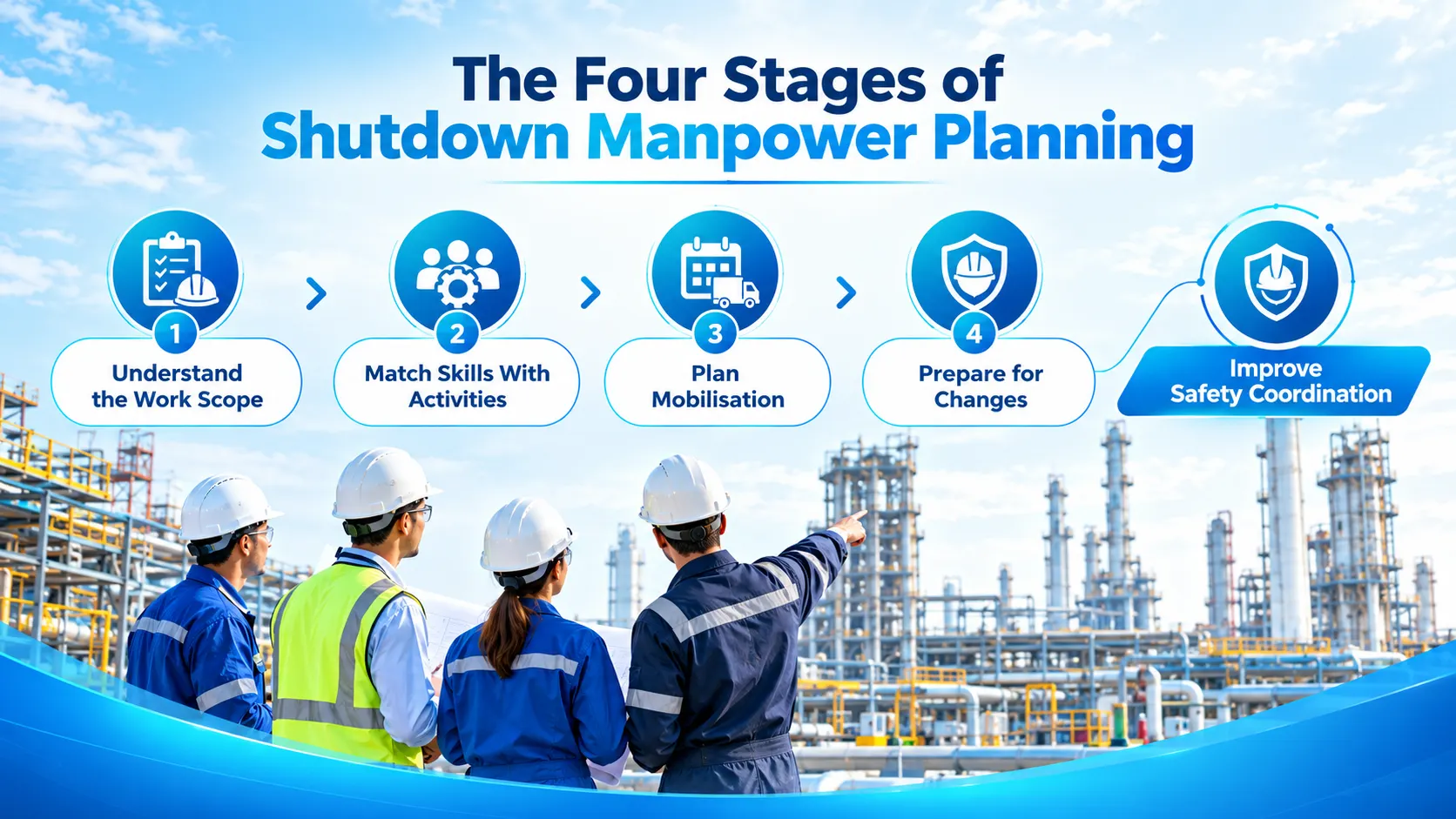
A practical workforce strategy can be divided into four stages.
1. Understand the Work Scope
Start by reviewing the shutdown schedule and work packages.
Identify the activities, expected duration, work locations, and required skills.
This creates a workforce map.
Instead of saying, “We need 200 workers,” the project team can determine:
“We need 40 mechanical fitters during this phase, 25 welders during the fabrication stage, and additional scaffolders before these activities begin.”
That is a much more useful plan.
2. Match Skills With Activities
Not every worker can perform every industrial task.
Skill matching is especially important for oil and gas, petrochemical, power and other industrial environments where site requirements can be strict.
A manpower partner should therefore understand the technical profile required for each role before mobilisation.
This can include reviewing experience, trade skills, relevant documentation and project requirements.
3. Plan Mobilisation
Finding a suitable worker is only one part of the process.
The workforce also needs to be ready to reach the project when required.
Accommodation, transportation, documentation, onboarding, and site requirements may all affect mobilisation.
This is why experienced manpower providers maintain systems and infrastructure that support workforce deployment.
4. Prepare for Changes
Shutdown projects do not always follow the original plan.
A work package may expand. An additional repair may be discovered. One team may need to work longer than expected.
A good workforce plan therefore needs some flexibility.
Having access to additional skilled manpower can help contractors respond when the scope changes.
Safety Cannot Be an Afterthought
There is another side of workforce planning that deserves serious attention: worker safety and welfare.
The UAE Ministry of Human Resources and Emiratisation states that employers must provide preventive measures against occupational risks, appropriate training, and a safe working environment.
For industrial and construction establishments with at least 100 workers, UAE guidance also requires a qualified occupational health and safety officer.
Worker accommodation is another important part of workforce management. MoHRE maintains standards covering health, comfort, safety, ventilation, sanitation, and other accommodation requirements.
This means a manpower strategy should not stop at:
“How many workers do we need?”
It should also ask:
“How will we support those workers throughout the project?”
For long shifts, demanding industrial environments and time-sensitive maintenance work, worker welfare can influence workforce stability and overall project organisation.
How Euro Emirates Supports Industrial Workforce Requirements
For contractors, managing a large temporary workforce internally can become a major responsibility.
Recruitment, screening, mobilisation, accommodation, and workforce management all require time and resources.
This is where Euro Emirates LLC can support businesses looking for structured manpower solutions in the UAE.
The company states that it was established in 1988 and has worked across more than 2,500 projects. Its manpower operations include a workforce of more than 1,200 personnel, with screening, company-owned accommodation, catered meals, and worker welfare measures.
Its Dubai operations also include manpower and accommodation infrastructure in locations such as Dubai Investment Park and Al Quoz, alongside facilities in Abu Dhabi and Ajman.
For a shutdown project, this type of infrastructure matters because manpower is not simply about recruitment.
It is about readiness.
A contractor needs people who can be organised, mobilised and supported throughout the assignment.
Why Industrial Manpower Supply Should Be Planned Early
Waiting until the last minute can create unnecessary pressure.
Suppose a shutdown is scheduled to begin in four weeks.
The contractor suddenly discovers that 30 additional welders and pipe fitters are required.
Now the recruitment process becomes urgent.
Candidates need to be sourced. Skills need to be checked. Documentation needs to be reviewed. Mobilisation needs to be arranged.
The project team is now trying to solve a workforce problem while preparing for the shutdown itself.
Early planning changes that situation.
With a defined manpower plan, businesses can identify their requirements earlier and work with a manpower provider to prepare the workforce before the critical period begins.
This is particularly useful for industrial manpower supply in Dubai, where contractors may need to coordinate resources across different project locations and industrial sectors.
A Practical Workforce Checklist for Shutdown Projects
Before finalising your manpower plan, ask these questions:
- What is the complete shutdown scope?
List every major work package. - Which skills are required?
Separate technical, skilled, semi-skilled, and support roles. - When is each team required?
Create a manpower timeline instead of using one fixed headcount. - Are supervisors included?
A large workforce needs proper coordination. - Are safety requirements covered?
Review site-specific HSE requirements before mobilisation. - What happens if the scope increases?
Keep a contingency workforce plan. - How will workers reach the site?
Transportation and accommodation should be considered early. - Who will manage workforce coordination?
Define responsibilities between the contractor and manpower provider.
These simple questions can reveal workforce gaps before they affect the shutdown schedule.
The Human Side of Shutdown Manpower
Behind every manpower number is a person.
A welder leaving accommodation before sunrise. A technician preparing tools for another long shift. A supervisor checking the day’s work plan. A safety officer walking through a busy industrial area to make sure procedures are being followed.
Shutdown projects may be highly technical, but they are still powered by people.
That is why responsible workforce planning should consider both project performance and worker welfare.
A workforce that is properly selected, prepared, and supported can approach the job with greater clarity and confidence.
For contractors, that can mean fewer surprises during an already demanding project period.
Turning a Tight Shutdown Window Into a Planned Workforce
A successful shutdown is rarely the result of one decision.
It is the result of many small decisions made early.
The right skills are identified. Workforce numbers are mapped against the schedule. Mobilisation is planned. Safety requirements are considered. Accommodation and transportation are organised. Backup resources are kept in mind.
When these pieces come together, manpower becomes part of the project strategy rather than a last-minute problem.
For companies handling industrial, oil and gas, maintenance and turnaround projects in the UAE, Euro Emirates LLC provides manpower outsourcing solutions designed around changing project requirements. Its stated experience, workforce infrastructure, and worker welfare approach make it a relevant option for contractors seeking structured workforce support.
The key lesson is simple:
Do not wait for the shutdown clock to start before planning the people who will keep the work moving.
Frequently Asked Questions
1.What is shutdown manpower in the UAE?
Shutdown manpower refers to the skilled, semi-skilled, and support workforce required during a planned industrial shutdown. Workers may support maintenance, inspection, repair, fabrication, scaffolding, electrical, mechanical, and safety activities.
2.Why is turnaround manpower UAE planning important?
Turnaround projects usually involve many activities within a limited period. Proper manpower planning helps contractors match workers with specific tasks, coordinate shifts, and prepare resources before the turnaround begins.
3.What workers are commonly needed for an oil and gas shutdown?
Requirements vary by project, but common roles can include welders, pipe fitters, mechanical fitters, electricians, instrument technicians, scaffolders, riggers, painters, supervisors, and safety personnel.
4.How early should companies plan shutdown manpower?
There is no single timeline for every project. Planning should begin as soon as the shutdown scope and schedule are sufficiently defined. Earlier planning gives contractors more time to identify skills, workforce numbers, and mobilisation requirements.
5.What should companies check before hiring industrial manpower?
Companies should consider technical skills, relevant experience, documentation, site requirements, HSE expectations, mobilisation arrangements, accommodation, and workforce management support.
6.Can manpower requirements change during a shutdown?
Yes. Shutdown work can change when inspections reveal additional repairs or when certain activities take longer than expected. A flexible manpower plan can help contractors respond to these changes.
7.Why choose a manpower outsourcing partner for industrial projects?
A specialist manpower partner can help businesses manage sourcing, screening, mobilisation, and workforce support. This can allow project teams to focus more closely on execution while workforce requirements are managed through an established process.
Final Takeaway
A shutdown may last days or weeks, but the workforce planning behind it should begin much earlier.
From identifying technical roles to preparing mobilisation and worker welfare, every detail matters.
For businesses seeking industrial manpower supply in Dubai and wider UAE workforce support, early planning can make the difference between constantly reacting to manpower problems and entering a shutdown with a prepared team.
The goal is not simply to have more workers.
The goal is to have the right workforce ready when the project needs it.