AI Automation in Workforce Management: What UAE Businesses Should Expect in 2026
If you have been involved in managing projects in the UAE over the past few years, you have likely noticed a gradual but important shift in how labour is planned and managed.
At first glance, everything may seem unchanged. Workers still arrive on-site early in the day, supervisors still coordinate tasks, and projects continue to move forward under tight timelines.
However, the real change is happening beneath the surface.
Decisions that once relied heavily on manual coordination are now supported by better systems, clearer data, and faster communication. This is where the future of labour supply in the UAE is heading. It is no longer just about providing manpower. It is about managing that manpower with precision.
Labour Supply is Moving Beyond Basic Deployment
For a long time, labour supply was treated as a straightforward function. Businesses focused on getting the required number of workers on-site and ensuring that projects had enough manpower to continue without interruption.
That approach worked well in a less complex environment.
Today, the situation is different. Projects are larger, timelines are tighter, and expectations from stakeholders are significantly higher. Simply having enough workers is no longer sufficient.
Businesses now need to know how effectively those workers are being deployed, how quickly adjustments can be made, and how consistently performance can be maintained across different phases of a project.
This shift is what is redefining manpower trends across the UAE.
The Growing Role of Automation in Daily Operations
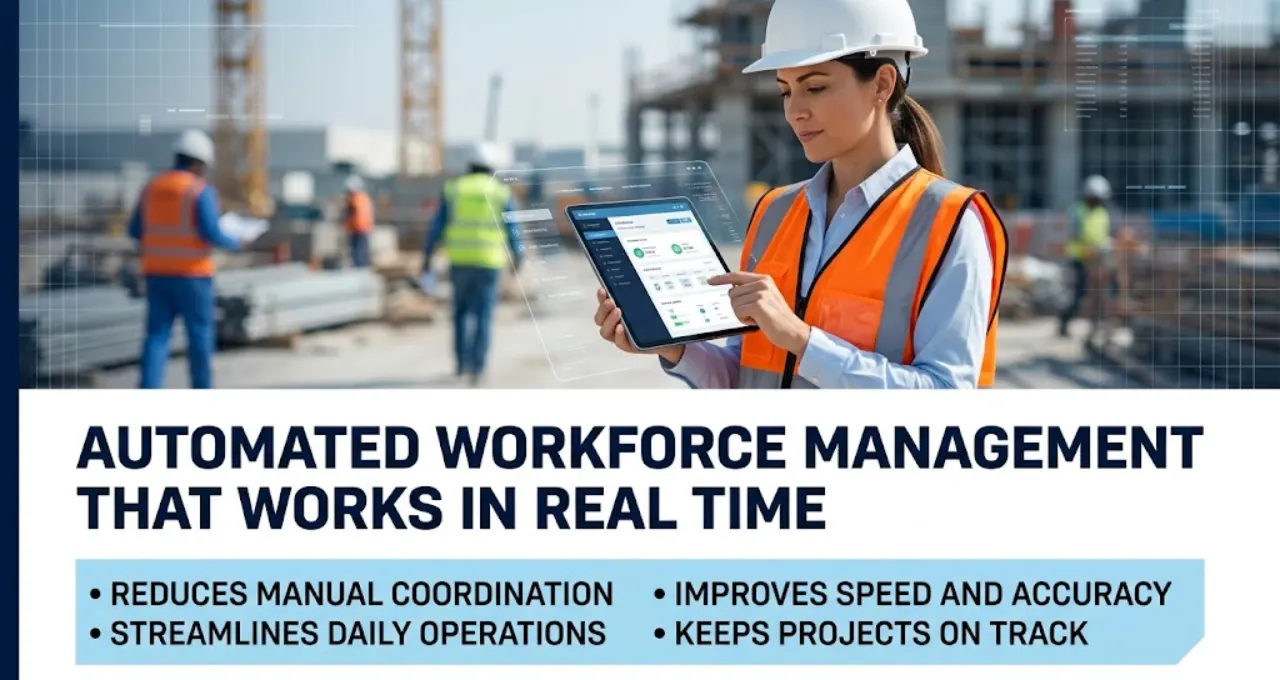
Automation is gradually becoming a part of workforce management, but not in the way many people expect.
It is not replacing workers or drastically changing job roles. Instead, it is improving how routine processes are handled behind the scenes.
Tasks such as attendance tracking, shift scheduling, payroll coordination, and reporting are increasingly being automated. This reduces the need for repetitive manual work and allows teams to focus on more critical operational decisions.
More importantly, automation improves accuracy and speed.
When information is updated in real time, managers no longer have to rely on delayed reports or fragmented communication. They can make decisions based on current data, which helps reduce errors and prevent small issues from becoming larger problems.
How AI Is Reshaping Workforce Decisions
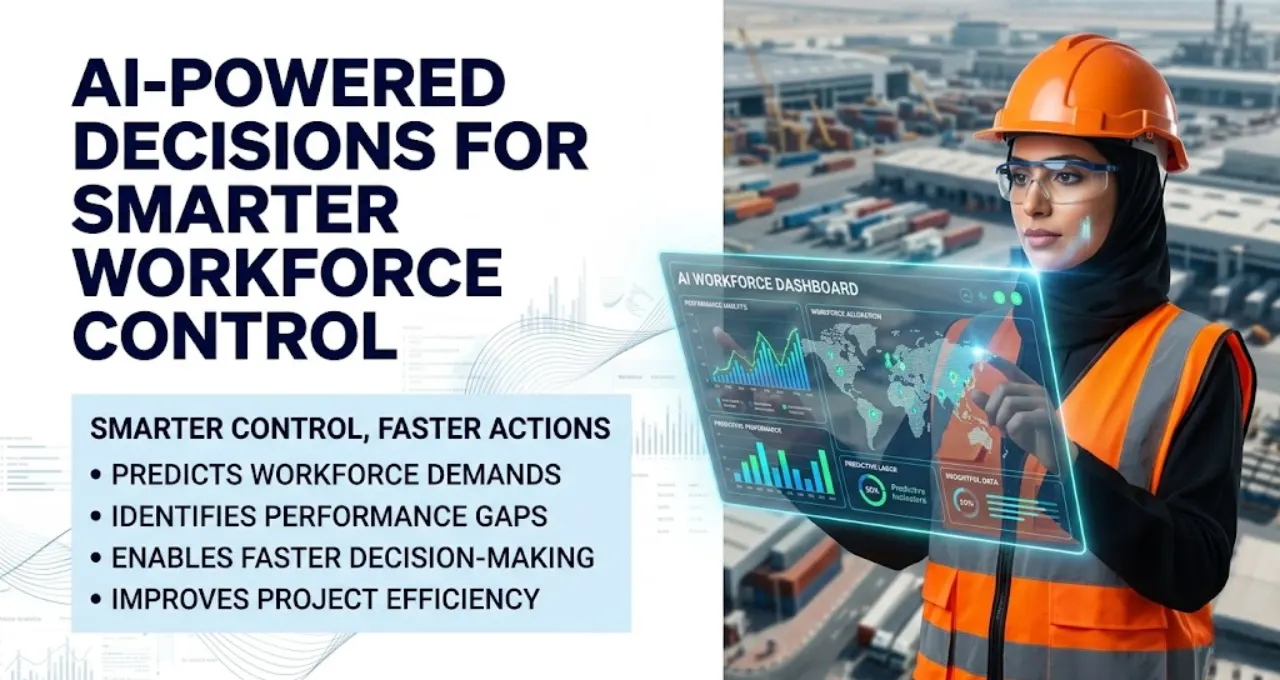
While automation handles routine processes, artificial intelligence is starting to influence decision-making in a more strategic way.
AI systems can analyse patterns across workforce data and identify trends that are not immediately visible through manual observation.
For example, businesses can now anticipate workforce shortages, identify inefficiencies in allocation, and monitor productivity levels across different teams and locations.
This allows project managers to act earlier, rather than responding after a problem has already affected operations.
The result is a more proactive approach to workforce management, which is becoming a defining feature of modern labour supply models in the UAE.
Increasing Operational Pressure on Businesses
Managing labour in today’s environment involves far more than just workforce coordination.
Businesses are dealing with multiple interconnected factors, including compliance requirements, accommodation logistics, transportation, and cost control. Each of these elements must align for operations to run smoothly.
When even one part of this system is not managed properly, it can create delays and inefficiencies that impact the entire project.
This growing complexity is one of the main reasons businesses are reconsidering how they approach labour supply.
They are not necessarily moving away from traditional models entirely, but they are looking for ways to make them more structured and reliable.
The Shift Towards Structured Workforce Systems
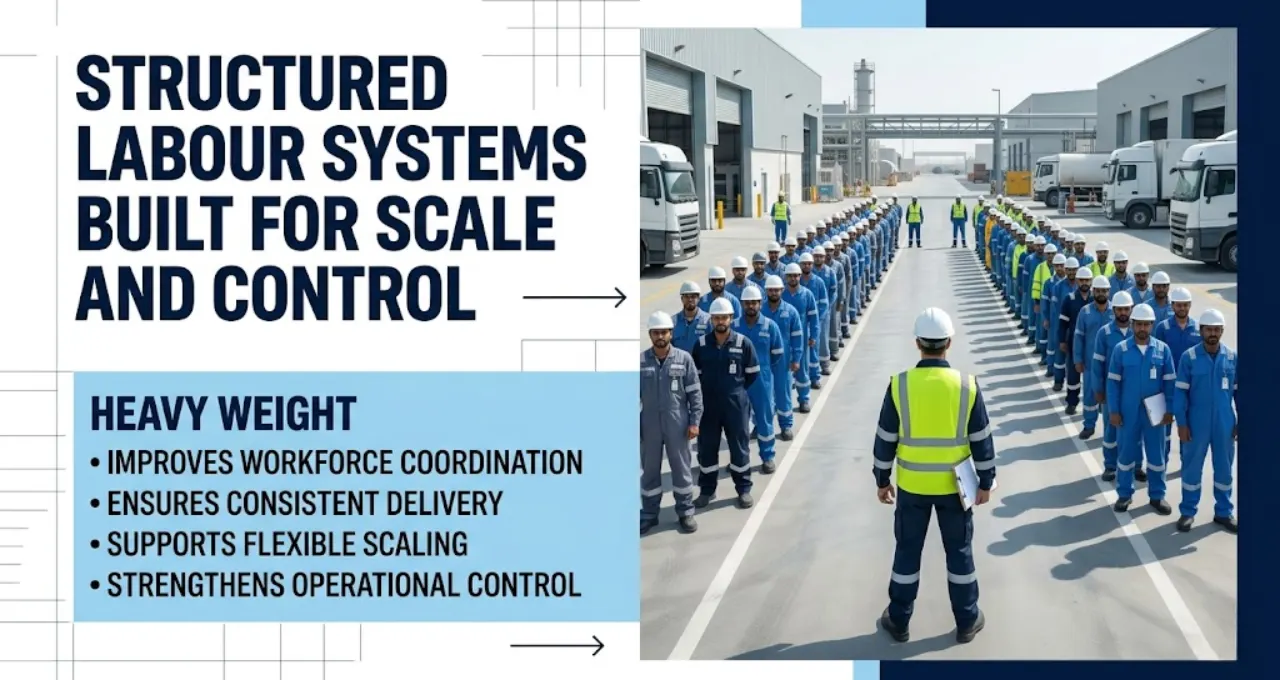
One of the most noticeable changes in recent years is the move from a simple labour supply to more structured workforce systems.
Instead of focusing only on providing manpower, businesses are now building processes that support better planning, monitoring, and coordination.
This includes:
- real-time tracking of workforce deployment
- dynamic scheduling based on project needs
- clear visibility into performance and productivity
- faster communication between teams and supervisors
When these elements are in place, decision-making becomes more efficient, and projects are less likely to face unexpected disruptions.
Why Traditional Models Are Under Pressure
Traditional labour supply models are not disappearing, but they are being challenged by rising expectations.
Manual coordination, delayed updates, and limited visibility are no longer acceptable in high-value or time-sensitive projects.
Businesses are now looking for partners who can offer more than just manpower. They expect reliability, consistency, and the ability to adapt quickly to changing requirements.
This is why the industry is gradually shifting towards more integrated and technology-supported approaches.
The Importance of Choosing the Right Labour Supply Partner
As workforce management becomes more complex, the role of a labour supply partner becomes more critical.
Businesses need providers who understand not only how to supply manpower, but also how to support operations as a whole.
A reliable partner should offer:
- structured workforce deployment aligned with project timelines
- strong compliance awareness within the UAE regulatory framework
- the ability to scale manpower based on project demands
- clear communication and coordination across teams
- consistent service delivery without operational gaps
These factors play a significant role in ensuring that labour supply contributes positively to project performance rather than creating additional challenges.
How Euro Emirates LLC Supports Evolving Workforce Needs
In this changing environment, companies are increasingly looking for partners who combine operational experience with structured workforce solutions.
Euro Emirates LLC approaches labour supply with this broader perspective.
Rather than focusing only on numbers, they align manpower deployment with the practical needs of each project.
- workforce planning that matches real timelines and site requirements
- coordination across manpower, accommodation, and transport services
- consistent focus on compliance and operational standards in the UAE
- scalable solutions that adapt as project demands change
This approach helps reduce uncertainty and improve overall workflow.
For project managers and business owners, it creates a more stable and predictable operating environment.
Read Our Blogs
Compliance Requirements for Labour Supply in the UAE
Labour Supply Challenges in Dubai: What Businesses Struggle With in 2026
Labour Supply vs In-House Hiring in Dubai: What Contractors Should Choose in 2026
The Human Factor Remains Central
Despite the increasing role of technology, the workforce itself remains at the centre of every project.
Automation and AI are tools that support better management, but they do not replace the need for skilled and reliable workers.
In fact, better systems often lead to improved working conditions.
Workers are allocated more effectively, schedules become more manageable, and communication improves across teams.
This ultimately leads to higher productivity and better project outcomes.
What the Future Holds for Labour Supply in the UAE
Looking ahead, the direction of labour supply in the UAE is becoming clearer.
The focus will continue to shift towards:
- more data-driven workforce planning
- improved coordination across operational functions
- stronger compliance systems
- greater emphasis on efficiency and productivity
These changes will not happen overnight, but they are already underway.
Businesses that adapt early will find it easier to manage complexity and maintain consistency across their projects.
Frequently Asked Questions
-
What is changing in the labour supply in the UAE?
Labour supply is becoming more structured and technology-supported, with a focus on efficiency, planning, and real-time decision-making.
-
Is automation replacing workers?
No, automation is improving how workforce operations are managed, not replacing the workforce itself.
-
How does AI help in manpower management?
AI helps identify patterns, predict workforce needs, and improve decision-making based on data.
-
What should businesses look for in a labour supply partner?
They should look for experience, scalability, compliance knowledge, and the ability to support overall operations effectively.
Final Thoughts
The future of labour supply in the UAE is not defined by a single technology or trend.
It is shaped by a gradual shift towards better planning, clearer visibility, and more structured operations.
Businesses are no longer focusing only on how many workers they have.
They are focusing on how effectively those workers are managed.
And in a market where efficiency and reliability are critical, that shift makes all the difference.