How UAE Companies Can Reduce Project Delays With Reliable Workforce Supply Partners: A 2026 Guide
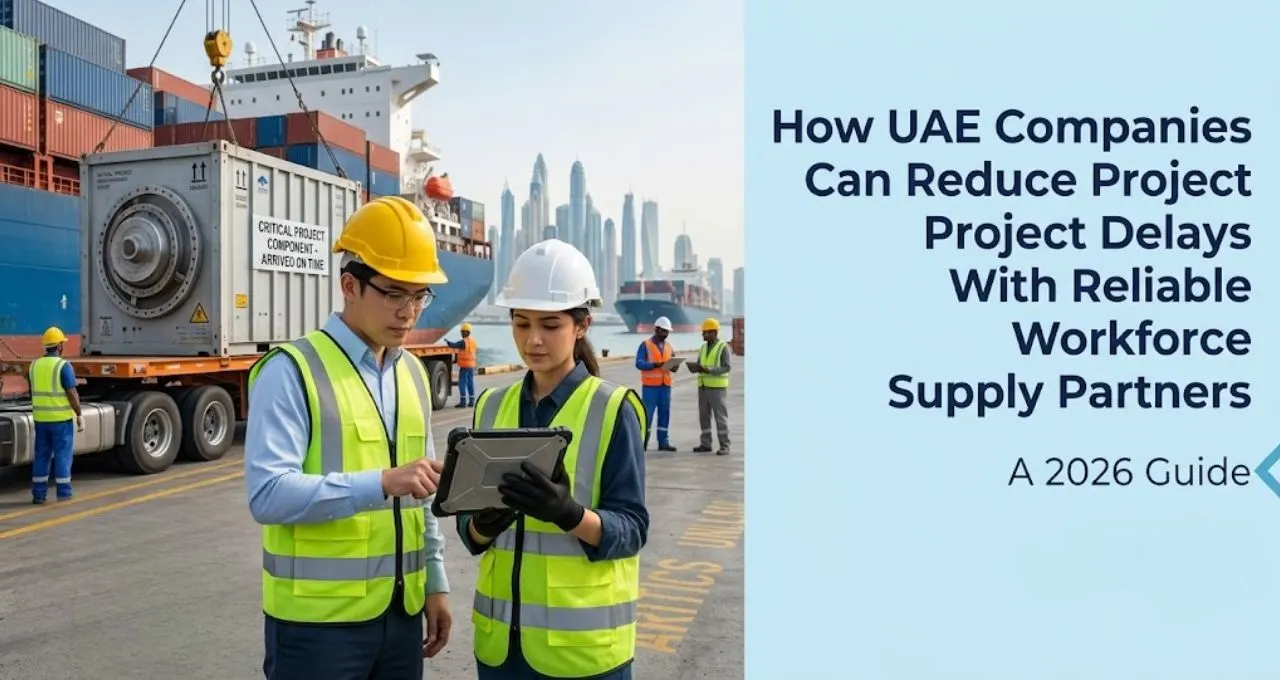
If you’ve ever watched a project slip its handover date because a trade crew didn’t show up on time, you already know the real cost of a project delay isn’t just money. It’s the client relationship, the next tender, and the reputation your company spent years building. In a market moving as fast as the UAE’s, that gap between “workforce booked” and “workforce on site” is where most schedules quietly fall apart.
This is exactly why a growing number of contractors, EPC firms, and industrial operators are rethinking how they source labour. Instead of running recruitment from scratch on every project, they’re partnering with a reliable manpower supply company in the UAE provider that already has trained crews, transport, housing, and compliance sorted out. Below, we break down why delays happen, what a genuine workforce partner actually fixes, and how to choose one that won’t leave you exposed mid-project.
Why UAE Project Timelines Keep Slipping
The UAE construction sector isn’t short on demand. Industry trackers put the active construction pipeline at roughly USD 308 billion through 2030, with the bulk concentrated across Dubai and Abu Dhabi’s infrastructure, energy, and industrial programs. Sector headcount has climbed to around 1.42 million workers, and MoHRE issued over 187,000 new construction work permits in a single recent year alone. Demand for labour, in short, has never been higher.
The problem is that supply hasn’t kept pace with quality. Certified trades — masons, electricians, scaffolders, site supervisors — remain genuinely scarce, and contractors report shortages precisely in the roles that keep a schedule intact. When a project can’t secure the right hands at the right time, the knock-on effect is predictable:
- Formwork and concrete pours get pushed, delaying every phase behind them
- MEP teams sit idle waiting for civil works to catch up, or vice versa
- Equipment rental clocks keep running on machinery nobody’s using
- Overtime costs climb as a smaller crew tries to absorb a full schedule
- Safety incidents rise when fatigued, understaffed teams rush to catch up
None of this is a materials problem or a design problem. It’s a project workforce solutions problem, and it’s almost always solvable before it starts.
What a Reliable Manpower Partner Actually Changes
A genuine outsourcing partner doesn’t just send bodies to site. The value shows up in three places that directly protect your timeline.
Speed of Mobilisation
Instead of advertising, screening, and processing visas for every new phase, you draw from a workforce pool that’s already vetted, housed, and ready to deploy. That difference between a two-week mobilisation and a same-week one is often the difference between hitting a milestone and missing it.
Compliance Handled Off Your Desk
Labour contracts, visa renewals, payroll, PPE training, and accommodation standards all sit with the supplier, not your project office. For firms managing multiple sites across Dubai, Abu Dhabi, or the Northern Emirates, that’s a meaningful chunk of admin risk removed at once.
Flexibility Across Project Phases
Structural work needs steel fixers and carpenters. MEP stages need electricians and HVAC technicians. Finishing needs painters and tilers. A strong construction workforce outsourcing partner scales the crew up or down with the phase, so you’re never overstaffed and never scrambling.
Beyond Construction: Oil, Gas and Solar Also Depend on Workforce Reliability
Workforce risk doesn’t stop at the construction gate. Oil, gas, and petrochemical operators running turnaround schedules face the same exposure — a missing technician can hold up a shutdown window that costs far more per hour than any labour rate. And with the UAE targeting roughly AED 600 billion in renewable energy investment by 2050, solar EPC and O&M work has become its own workforce category entirely.
This is where solar maintenance companies in Dubai increasingly rely on outsourced technical crews for panel cleaning, harmonic analysis, and inverter servicing across grid-connected, off-grid, and hybrid installations. Desert dust alone can cut panel output significantly if cleaning schedules slip, which makes consistent technician availability a direct revenue issue, not just a maintenance one.
What to Look for in a Trusted Manpower Supply Partnerin the UAE
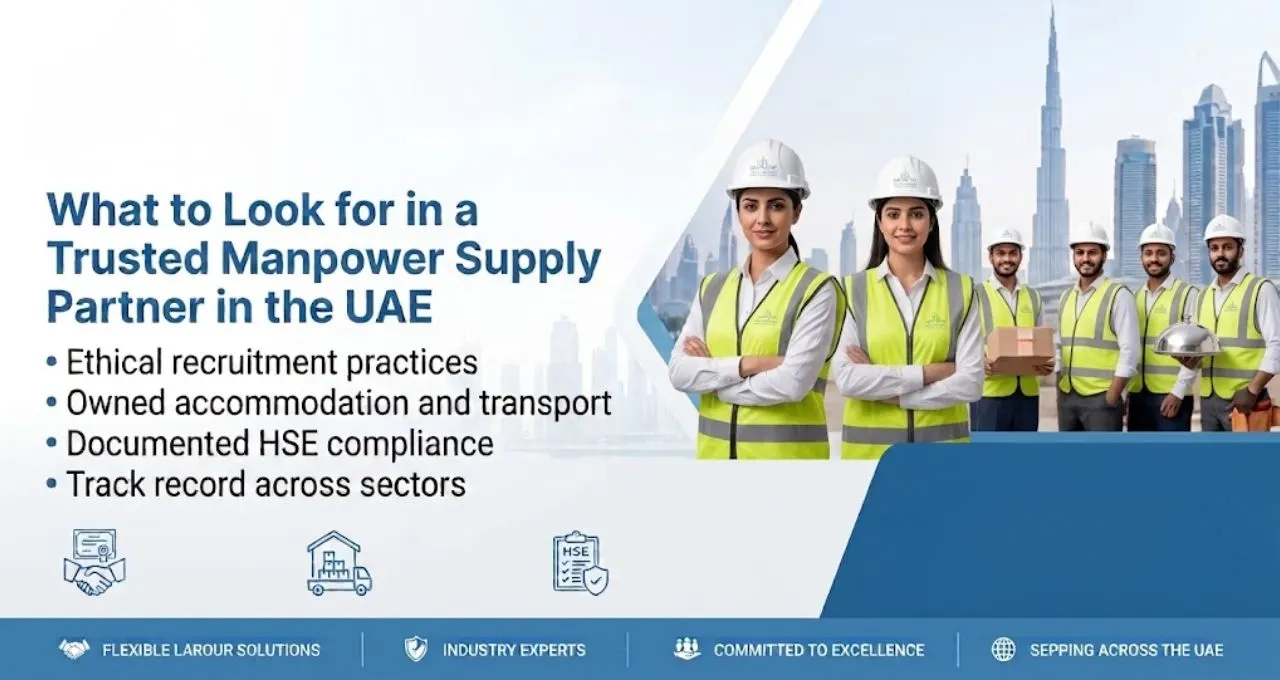
Not every outsourcing firm operates at the same standard, and the difference matters once workers are actually on your site. When evaluating manpower outsourcing companies in the UAE, it’s worth checking for:
- Ethical recruitment practices — proper screening, fair contracts, and no hidden recruitment fees passed to workers
- Owned accommodation and transport — rather than subcontracted housing you have no visibility into
- Documented HSE compliance — safety training that’s verifiable, not just claimed
- Track record across sectors — a firm that’s supplied power, petrochemical, desalination, and real estate projects understands site pressure differently than one working a single niche
- Response time under pressure — how fast can they actually deploy when a project timeline shifts
Euro Emirates Group has operated in the UAE since 1988, supporting over 2,500 projects across power generation, petrochemical, desalination, airports, and real estate developments. Our workforce of 1,200+ personnel lives in company-owned housing across Dubai, Abu Dhabi, and Ajman, with in-house catering and a company-owned transport fleet.
We also run a dedicated Solar EPC and O&M division, covering everything from grid-connected and hybrid plant installation to routine dust cleaning and harmonic analysis — giving clients a single partner across both construction manpower and renewable energy maintenance.
Frequently Asked Questions
How does manpower supply reduce construction project delays in the UAE?
It shortens the mobilisation window. A supplier with a pre-screened, ready-to-deploy workforce can place skilled trades on site within days instead of the weeks a full independent recruitment process typically takes, keeping dependent project phases on schedule.
What is the difference between manpower supply and workforce outsourcing?
Manpower supply usually refers to providing labour for specific trades or short-term needs, while workforce outsourcing is broader — it can include HR administration, payroll, compliance management, and long-term staffing strategy alongside the labour itself.
Which industries in the UAE use manpower supply services most?
Construction, oil and gas, petrochemicals, solar EPC, logistics, and industrial manufacturing are the heaviest users, largely because these sectors run on tight, interdependent project schedules where a single staffing gap affects multiple downstream activities.
Why do solar projects in Dubai need dedicated maintenance workforce partners?
Regular panel cleaning, inverter checks, and harmonic analysis directly affect energy output, especially given the region’s dust exposure. Solar maintenance companies in Dubai rely on trained technician crews to keep servicing schedules consistent and protect plant performance.
What should a company check before choosing a manpower supply partner in the UAE?
Verify ethical recruitment practices, ownership of housing and transport, documented HSE compliance, sector experience, and how quickly the supplier can mobilise workers when project timelines change.
The Bottom Line:
Project delays in the UAE rarely start with a single dramatic failure. They start small — one missing trade, one slow mobilisation, one compliance gap — and compound from there. Partnering with an established skilled labour supply company in the UAE that already controls its housing, transport, and compliance removes that risk before it reaches your schedule.
If your next project can’t afford another slipped milestone, talk to a team that’s been solving exactly this problem.
Get in touch with Euro Emirates Group to discuss workforce, transport, or solar EPC support for your next project.